The area now called England was first inhabited by modern humans during the Upper Palaeolithic period, but it takes its name from the Angles, one of the Germanic tribes who settled during the 5th and 6th centuries. England became a unified state in 927 AD, and since the Age of Discovery, which began during the 15th century, has had a significant cultural and legal impact on the wider world.[8] The English language, the Anglican Church, and English law – the basis for the common law legal systems of many other countries around the world – developed in England, and the country's parliamentary system of government has been widely adopted by other nations.[9] The Industrial Revolution began in 18th-century England, transforming its society into the world's first industrialised nation.[10]
Thursday, September 5, 2013
england
England) is a country that is part of the United Kingdom.[5][6][7] It shares land borders with Scotland to the north and Wales to the west. The Irish Sea lies north west of England, whilst the Celtic Sea lies to the south west. The North Sea to the east and the English Channel to the south separate it from continental Europe. Most of England comprises the central and southern part of the island of Great Britain which lies in the North Atlantic. The country also includes over 100 smaller islands such as the Isles of Scilly, and the Isle of Wight.
The area now called England was first inhabited by modern humans during the Upper Palaeolithic period, but it takes its name from the Angles, one of the Germanic tribes who settled during the 5th and 6th centuries. England became a unified state in 927 AD, and since the Age of Discovery, which began during the 15th century, has had a significant cultural and legal impact on the wider world.[8] The English language, the Anglican Church, and English law – the basis for the common law legal systems of many other countries around the world – developed in England, and the country's parliamentary system of government has been widely adopted by other nations.[9] The Industrial Revolution began in 18th-century England, transforming its society into the world's first industrialised nation.[10]
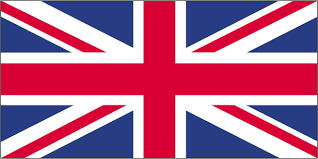 England's terrain mostly comprises low hills and plains, especially
in central and southern England. However, there are uplands in the north
(for example, the mountainous Lake District, Pennines, and Yorkshire Dales) and in the south west (for example, Dartmoor and the Cotswolds). The former capital of England was Winchester until replaced by London in 1066. Today London is the largest metropolitan area in the United Kingdom and the largest urban zone in the European Union by most measures.[nb 3] England's population
is about 53 million, around 84% of the population of the United
Kingdom, and is largely concentrated in and around London, the South
East, and conurbations in the Midlands, the North West, the North East and Yorkshire, which each developed as major industrial regions during the 19th century. The Kingdom of England – which after 1284 included Wales – was a sovereign state until 1 May 1707, when the Acts of Union put into effect the terms agreed in the Treaty of Union the previous year, resulting in a political union with the Kingdom of Scotland to create the new Kingdom of Great Britain.[11][12] In 1801, Great Britain was united with the Kingdom of Ireland through another Act of Union to become the United Kingdom of Great Britain and Ireland. In 1922, the Irish Free State was established as a separate dominion, but the Royal and Parliamentary Titles Act 1927 reincorporated into the kingdom six Irish counties to officially create the current United Kingdom of Great Britain and Northern Ireland.
The area now called England was first inhabited by modern humans during the Upper Palaeolithic period, but it takes its name from the Angles, one of the Germanic tribes who settled during the 5th and 6th centuries. England became a unified state in 927 AD, and since the Age of Discovery, which began during the 15th century, has had a significant cultural and legal impact on the wider world.[8] The English language, the Anglican Church, and English law – the basis for the common law legal systems of many other countries around the world – developed in England, and the country's parliamentary system of government has been widely adopted by other nations.[9] The Industrial Revolution began in 18th-century England, transforming its society into the world's first industrialised nation.[10]

holland
This article is about a region in the Netherlands, not the country itself. For the country of the Netherlands as a whole, see Netherlands. For other uses of the word Holland, see Holland (disambiguation).
Holland


| Area | 5,488 square kilometres (2,119 sq mi) |
|---|---|
| Population | 6,065,459 (2006 est.) |
| Density | 1105.22/km2 (3032.72/sq mi) |
| Regions | North Holland South Holland |
| Demonym | Hollander |
| Languages | Dutch (mainly Hollandic dialects) |
| Largest cities (2010) |
Amsterdam (739,290) Rotterdam (607,460) The Hague (473,940) Haarlem (151,853) Leiden (118,714) |

From the 10th to the 16th century, Holland proper was a unified political region within the Holy Roman Empire as a county ruled by the Counts of Holland. By the 17th century, Holland had risen to become a maritime and economic power, dominating the other provinces of the newly independent Dutch Republic.
Today, the former County of Holland roughly consists of the two Dutch provinces of North Holland and South Holland, which together include the Netherlands' three largest cities: the capital city of Amsterdam; the seat of government of The Hague; and Rotterdam
Thursday, August 29, 2013
eiffel tower is my favourite place in life...even i never go there but my feeling say yes i will go there soon...i wondered if i go there do i meet my friendss?? because i need friends there..eiffel tower is totally a city that fabulous..i love all the clothes when i bought it in indonesia and it tag "made in France"..yuhhhuuuu!!!!!!!my mom said i will go to France if i get a very good result of exam... i hope i will meet GUSTAVE EIFFEL in France because he's the one who made the eiffel tower in france...
The Eiffel Tower (French: La Tour Eiffel, [tuʁ ɛfɛl]) is an iron lattice tower located on the Champ de Mars in Paris, named after the engineer Gustave Eiffel, whose company designed and built the tower. Erected in 1889 as the entrance arch to the 1889 World's Fair, it has become both a global cultural icon of France and one of the most recognizable structures in the world. The tower is the tallest structure in Paris[10]
and the most-visited paid monument in the world; 7.1 million people
ascended it in 2011. The tower received its 250 millionth visitor in
2010.

| Eiffel Tower | |
|---|---|
| La Tour Eiffel | |

The Eiffel Tower as seen from
the Champ de Mars |
|

 |
|
| Record height | |
| Tallest in the world from 1889 to 1930[I] | |
| General information | |
| Type | Observation tower, Radio broadcasting tower |
| Location | Paris, France |
| Coordinates | 48°51′29.6″N 2°17′40.2″ECoordinates: 48°51′29.6″N 2°17′40.2″E |
| Construction started | 1887 |
| Completed | 1889 |
| Opening | 31 March 1889 |
| Owner | City of Paris, France |
| Management | Société d'Exploitation de la Tour Eiffel (SETE) |
| Height | |
| Antenna spire | 324.00 m (1,063 ft) |
| Roof | 300.65 m (986 ft) |
| Top floor | 273.00 m (896 ft) |
| Technical details | |
| Floor count | 3 |
| Lifts/elevators | 9 |
| Design and construction | |
| Architect | Stephen Sauvestre |
| Structural engineer | Maurice Koechlin, Émile Nouguier |
| Main contractor | Compagnie des Etablissements Eiffel |
| References | |
| [1][2][3][4][5][6][7][8][9] | |

Subscribe to:
Posts (Atom)